
Breathing happens automatically, so it’s easy to forget how deeply it influences the way we feel.
When you’re relaxed, your breathing is often slower and more effortless. But during stress, concentration, fatigue, or prolonged periods of sitting, your breathing pattern can subtly change. You may begin taking shorter, shallower breaths without realizing it.
Occasionally, this isn’t necessarily a problem. But when shallow breathing becomes a habitual pattern, it can contribute to a cycle of tension, altered posture, and difficulty fully relaxing.
Understanding your breathing can therefore be an important part of understanding your body.
What Is Shallow Breathing?
Shallow breathing generally refers to breathing that relies more heavily on the upper chest rather than allowing the diaphragm and lower rib cage to move naturally.
You may notice:
- Your shoulders lifting when you breathe
- Limited movement around your lower ribs
- Frequent sighing
- Holding your breath when concentrating
- A feeling that you can’t take a satisfying breath
- Breathing faster during stressful moments
Everyone’s breathing changes throughout the day. The concern is less about occasional shallow breaths and more about patterns that become persistent.
Why Stress Can Change the Way You Breathe
Your breathing is closely connected with your nervous system.
When you feel threatened or under pressure, your body naturally shifts into a more alert state. Breathing may become faster or more restricted as part of this response.
The problem can occur when everyday stress keeps your body in a heightened state for long periods.
You might spend hours working at a computer, driving through traffic, managing responsibilities, or worrying about what’s next—while unconsciously holding tension through your chest, shoulders, and abdomen.
Over time, that pattern can begin to feel normal.
Your Breathing and Your Muscles Work Together
Breathing isn’t just about your lungs.
Your diaphragm, rib cage, abdominal muscles, neck, shoulders, and other structures all contribute to respiration.
When breathing becomes more upper-chest dominant, some of the muscles around the neck and shoulders may become more involved.
This can contribute to sensations of:
- Neck tightness
- Shoulder tension
- Chest restriction
- Jaw clenching
- Upper-back fatigue
This doesn’t mean shallow breathing is the sole cause of these problems. Many factors can contribute to muscle tension.
But your breathing pattern is one piece of the larger movement puzzle.
The Posture Connection
Notice what happens to your body when you take a deep, comfortable breath.
Your rib cage expands. Your abdomen may move. Your shoulders can remain relatively relaxed.
Now compare that with sitting hunched over a laptop.
When the torso is compressed, natural movement of the rib cage can become more restricted. If that position is repeated for hours every day, your breathing mechanics and posture can begin influencing one another.
This is why improving movement isn’t always about stretching one tight muscle.
Sometimes it’s about creating more space for the entire body to move and breathe.
Can Breathing Affect How Relaxed You Feel?
Breathing and the nervous system communicate constantly.
Slow, comfortable breathing can be incorporated into relaxation practices and may help create a sense of calm. Conversely, rapid or restricted breathing can accompany stress and heightened alertness.
This doesn’t mean you can simply “breathe away” every stressful experience.
But becoming aware of your breathing gives you another way to notice what is happening inside your body.
Instead of waiting until you’re completely overwhelmed, you may begin recognizing earlier signs:
Tight shoulders → restricted breathing → increased tension → difficulty relaxing.
Awareness can help interrupt that cycle.
Simple Ways to Become More Aware of Your Breathing
You don’t need complicated exercises to start paying attention.
Try occasionally checking:
Your Shoulders
Are they rising toward your ears every time you inhale?
Your Rib Cage
Can you feel your ribs gently expanding as you breathe?
Your Jaw
Are you clenching your teeth without realizing it?
Your Breath
Are you holding your breath while concentrating?
Your Position
Are you curled forward or compressed at your desk?
The goal isn’t to force yourself to breathe deeply all day.
It’s simply to notice your natural breathing pattern without judgment.
How Acupuncture Can Fit Into a Whole-Body Approach
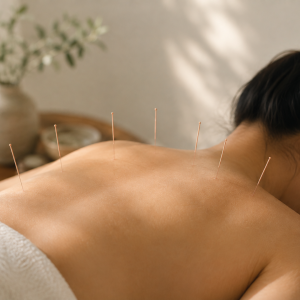
Acupuncture is often incorporated into holistic wellness routines for relaxation, stress management, and overall balance.
Rather than focusing exclusively on breathing itself, an acupuncture session can take a broader view of the individual’s physical and emotional state.
At Art of Healing, acupuncture is part of a whole-body approach that recognizes the relationship between tension, stress, movement, and nervous-system regulation.
Other services may complement this approach as well.
Massage Therapy
Can address areas of muscular tension that may accompany stress and restricted movement.
Cupping Therapy
May be used to support circulation and address areas of soft-tissue tension.
Somatic Therapy
Can help people develop greater awareness of physical sensations and the relationship between the body and emotional experiences.
The right combination depends on the individual.
Your Goal Isn’t to Take a “Perfect” Breath
There is no single breathing pattern that you need to maintain every moment of the day.
Your breathing naturally changes when you exercise, sleep, talk, laugh, concentrate, and experience stress.
The goal is flexibility.
A healthy breathing pattern should be able to adapt to what you’re doing without feeling persistently restricted or uncomfortable.
If you frequently experience shortness of breath, chest pain, dizziness, or other concerning breathing symptoms, seek appropriate medical evaluation rather than assuming they are caused by stress or posture.
Sometimes the Way You Breathe Reflects the Way You Live
Your breath responds to what you’re doing—and sometimes to what you’re carrying.
When life becomes stressful, the body adapts. Shoulders tighten. Posture changes. Breathing becomes less effortless. Eventually, these patterns can begin to feel ordinary.
Becoming aware of them is a simple but meaningful first step.
At Art of Healing, we take a holistic approach to wellness, recognizing that breathing, movement, stress, and nervous-system regulation are all part of the bigger picture.
You don’t need to control every breath.
Sometimes, you simply need to notice it.
Follow Us