
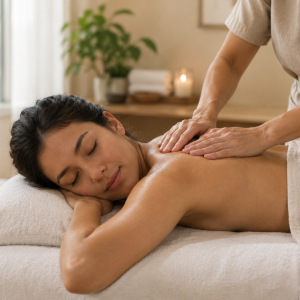
Massage therapy is often associated with relaxation, spa days, and treating sore muscles after a long week.
But there’s much more to therapeutic massage than simply lying down and relaxing.
Because massage has become such a familiar part of wellness culture, there are also plenty of misconceptions surrounding it.
Some people believe a massage should hurt to be effective. Others assume massage is only useful when something is already painful.
The reality is more nuanced.
Let’s clear up five common massage therapy myths and look at what massage can—and can’t—do for your body.
Myth #1: “A Massage Has to Hurt to Work”
This is probably one of the most common misconceptions about massage.
Some people believe that the deeper or more uncomfortable a treatment feels, the more effective it must be.
That’s not necessarily true.
Massage pressure should be appropriate for the individual, the technique being used, and the area being treated.
Some techniques naturally involve deeper pressure, while others may be gentler.
Feeling some pressure or mild temporary tenderness can happen, particularly when working with areas of tension.
But intense pain isn’t a requirement for a productive session.
In fact, forcing excessive pressure can cause unnecessary discomfort and may leave you feeling more sore afterward.
Effective massage isn’t about enduring the most pain. It’s about using the right approach for your body.
Myth #2: “Massage Is Only for People With Pain”
You don’t have to wait until your back hurts to book a massage.
Massage can also be part of a broader wellness and self-care routine.
People may seek massage to support:
- Relaxation
- General muscle comfort
- Mobility
- Recovery after physical activity
- Stress management
- Body awareness
- Overall well-being
Think of massage like other forms of maintenance.
You don’t only take care of your body after something goes wrong.
Regular movement, adequate sleep, nourishing food, and recovery all contribute to how you feel.
Massage can be one piece of that picture.
Myth #3: “One Massage Should Fix Everything”
A single massage can feel wonderful.
You may leave feeling lighter, more relaxed, or more comfortable.
But expecting one appointment to permanently resolve a problem that has developed over months or years isn’t realistic.
Your body is influenced by your everyday habits.
If you spend eight hours a day sitting at a desk, repeatedly use the same muscles at work, train intensely, or experience ongoing stress, those factors don’t disappear after one massage.
Massage can be one part of a larger approach.
Depending on your individual needs, lasting improvements may also involve:
- Regular movement
- Strengthening
- Mobility work
- Better recovery habits
- Posture awareness
- Stress management
- Adequate sleep
One session can be a starting point—not necessarily the entire solution.
Myth #4: “Deep Tissue Massage Is Always Better”
Deep tissue massage has become synonymous with “effective” massage for many people.
But deeper doesn’t automatically mean better.
Different bodies respond differently to pressure.
Someone who is physically active may enjoy deeper work, while another person may benefit more from moderate or gentle techniques.
The appropriate approach also depends on the area being treated and the goals of the session.
Massage therapy can include many different techniques and styles, such as:
- Swedish massage
- Deep tissue massage
- Shiatsu
- Sports massage
- Lymphatic massage
- Acupressure
The goal isn’t to choose the most intense option.
It’s to choose an approach that makes sense for you.
Myth #5: “Massage Is Just About the Muscles”
Your muscles are an important part of massage therapy, but they’re not the only thing you experience during a session.
Massage can also create an opportunity to slow down and become more aware of your body.
When you spend most of the day moving between work, errands, screens, and responsibilities, you may not notice how much tension you’re carrying.
You may not realize your shoulders are constantly raised.
You may not notice that your jaw is tight.
You may not recognize how physically exhausting stress can feel.
A massage session can provide dedicated time to pause and pay attention to those sensations.
That doesn’t mean massage treats every emotional or nervous-system concern.
It simply highlights an important connection:
Physical and emotional experiences can influence how we feel in our bodies.
What Massage Therapy Can Actually Do
Massage therapy isn’t a cure-all.
It shouldn’t be presented as a replacement for medical treatment, physical therapy, or other appropriate healthcare.
But it can be a valuable part of a wellness routine.
Depending on the technique and individual, massage may help support:
Relaxation
Taking intentional time away from daily responsibilities can make relaxation easier.
Muscle Comfort
Massage may help relieve feelings of muscular tightness and discomfort.
Mobility
Working with muscles and soft tissues may support comfortable movement.
Recovery
Massage is often incorporated into recovery routines, particularly by people who regularly engage in physical activity.
Stress Management
A quiet environment and focused bodywork can provide an opportunity to step away from daily demands.
The Most Important Part of a Massage? Communication
One of the biggest mistakes you can make during a massage is staying silent when something doesn’t feel right.
Your therapist can’t know exactly what you’re experiencing unless you tell them.
Speak up if:
- The pressure is too intense
- You feel uncomfortable
- You feel cold
- You need to change position
- You want more or less attention on an area
- Something feels painful rather than simply pressured
There is no prize for tolerating discomfort.
Good communication helps your therapist create a better experience for you.
Your Massage Doesn’t Have to Look Like Anyone Else’s
There’s no universal “perfect” massage.
Your body, lifestyle, activity level, preferences, and goals are different from someone else’s.
One person may want a relaxing Swedish massage.
Another may prefer focused deep tissue work.
Someone who participates in sports may seek sports massage.
Another person may enjoy Shiatsu or acupressure.
The best approach starts with understanding what you actually need.
When Massage May Not Be Appropriate
Massage isn’t appropriate for every situation.
Certain medical conditions, acute injuries, infections, unexplained swelling, recent procedures, or other health concerns may require medical evaluation before massage.
If you’re unsure whether massage is appropriate for you, speak with your healthcare provider and tell your massage therapist about relevant health concerns before your session.
And if you experience severe, sudden, or unexplained pain, don’t assume massage is the answer.
Find out what’s causing it first.
Massage Is More Personal Than You Think
Massage therapy isn’t about how much pressure you can tolerate.
It isn’t about finding the most painful spot.
And it isn’t something you have to save for the moment your body is already asking for help.
It’s about understanding what your body needs today.
Sometimes that’s deeper work.
Sometimes it’s gentle movement and relaxation.
Sometimes it’s simply an hour away from everything else.
At Art of Healing, massage therapy is approached as an individualized experience rather than a one-size-fits-all treatment.
Whether you’re looking for relaxation, muscular comfort, recovery, or simply time to reconnect with your body, the right massage should meet you where you are.
The best massage isn’t necessarily the deepest. It’s the one that’s right for you.
Follow Us