
Stress doesn’t always announce itself.
Sometimes it’s obvious—you feel overwhelmed, exhausted, or constantly on edge.
Other times, it shows up in quieter ways.
Your sleep changes.
Your energy feels different.
Your appetite shifts.
Your menstrual cycle becomes less predictable.
You find yourself feeling more irritable than usual.
You may not immediately connect these changes to stress.
But your stress response and your endocrine system—the system responsible for producing and regulating hormones—are closely connected.
That doesn’t mean stress is responsible for every hormonal change.
It does mean that ongoing stress can influence several of the body’s systems involved in hormonal regulation.
Understanding that connection can help you recognize when your body may be asking for more support.
Your Stress Response Is Designed to Help You
When your brain perceives a threat or significant demand, your body activates its stress response.
This involves communication between the brain and adrenal glands through what’s known as the hypothalamic-pituitary-adrenal (HPA) axis.
Hormones such as cortisol and adrenaline help your body respond to immediate challenges.
Your heart rate can increase.
Your attention becomes sharper.
Your body becomes more prepared to act.
This response is useful when you need it.
The problem isn’t that your body responds to stress.
The challenge can come when stress becomes frequent or prolonged and your body has fewer opportunities to recover.
Stress Doesn’t Affect Everyone the Same Way
Two people can experience the same stressful event and have very different responses.
One person might sleep normally.
Another may struggle to fall asleep.
One may lose their appetite.
Another may crave more food.
One person may feel physically restless.
Another may feel completely drained.
Your response can depend on many factors, including sleep, existing health conditions, lifestyle, environment, and the type and duration of stress you’re experiencing.
That’s why it’s important not to assume that every symptom is caused by “high cortisol” or a hormonal imbalance.
The body is more complicated than a single hormone.
Your Sleep and Hormones Are Connected
One of the easiest places to notice the relationship between stress and your body’s rhythms is sleep.
Stress can make it harder to settle down at night.
Your thoughts may continue racing even when you’re physically tired.
You may wake during the night or feel like you haven’t rested properly.
At the same time, sleep itself plays an important role in regulating many physiological processes.
This can create a frustrating cycle:
Stress affects sleep → poor sleep makes daily stress harder to manage → your body has less opportunity to recover.
Supporting healthy sleep habits can therefore be an important part of caring for your overall hormonal and nervous-system health.
Stress Can Influence Reproductive Hormones
The body constantly prioritizes resources based on its perception of what is happening around you.
When stress is significant or prolonged, the systems involved in the stress response can interact with reproductive hormone signaling.
For some people, this may contribute to changes in menstrual patterns or ovulation.
Stress is not the only possible cause of irregular periods, however.
Changes in menstrual cycles can also be associated with pregnancy, medications, thyroid conditions, polycystic ovary syndrome, perimenopause, changes in weight, intense exercise, and many other factors.
If your cycle changes significantly or persistently, it’s important to discuss it with an appropriate healthcare professional.
You May Notice Changes in Appetite
Have you ever been so stressed that you forgot to eat?
Or the opposite—you suddenly wanted comfort foods all day?
Stress can influence appetite and eating behavior, and hormonal signaling involved in hunger and fullness can also interact with the stress response.
This doesn’t mean that craving a certain food automatically indicates a hormonal problem.
It’s simply another example of how stress, behavior, metabolism, and hormones don’t operate in completely separate compartments.
Energy Can Feel Different Too
When you’re dealing with ongoing stress, you may feel like you’re constantly running on empty.
You might wake up tired.
You may struggle to concentrate.
You may rely on caffeine to get through the day.
You may feel exhausted but still unable to truly relax.
Fatigue has countless possible causes, including inadequate sleep, nutritional deficiencies, medications, medical conditions, mental-health concerns, and lifestyle factors.
So fatigue shouldn’t automatically be attributed to hormones or stress.
But if you’ve noticed several changes happening at once, it may be worth looking at the bigger picture rather than treating each symptom as an isolated problem.
Where Acupuncture Fits In
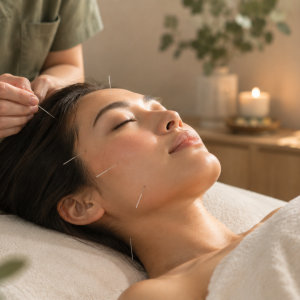
Acupuncture has been used for centuries as part of traditional Chinese medicine.
Modern research has investigated acupuncture for a range of conditions, including some symptoms associated with stress, pain, sleep, and women’s health.
However, the evidence varies depending on the condition, and acupuncture shouldn’t be presented as a universal treatment for hormonal imbalance.
Rather than thinking:
“Acupuncture fixes hormones.”
A more accurate perspective is:
“Acupuncture may be one complementary approach for supporting certain symptoms and aspects of overall well-being.”
A qualified practitioner can consider your individual concerns and determine whether acupuncture may be appropriate.
Acupuncture Isn’t a Substitute for Hormone Testing
This is an important distinction.
If you’re experiencing symptoms that make you concerned about your hormones, acupuncture shouldn’t replace appropriate medical evaluation.
Hormonal concerns may require:
- Medical history
- Physical examination
- Laboratory testing
- Imaging
- Medication
- Referral to a specialist
Depending on your symptoms, your healthcare provider may evaluate conditions involving the thyroid, reproductive hormones, blood sugar regulation, or other systems.
Knowing what’s actually happening is more helpful than assuming.
What You Can Do to Support Your Body During Stress
You don’t need to completely eliminate stress to support your health.
Instead, focus on creating more opportunities for recovery.
Prioritize Consistent Sleep
Aim for a regular sleep schedule and create a calming wind-down routine.
Eat Regularly
Give your body consistent nourishment rather than routinely skipping meals when life becomes busy.
Move Your Body
Walking, stretching, strength training, and other forms of movement can support overall physical and emotional well-being.
Create Space Between Responsibilities
Even short periods away from work, screens, and constant notifications can give you an opportunity to reset.
Pay Attention to Your Breathing
When stressed, some people unconsciously hold their breath or breathe more shallowly. Simply noticing your breathing can help you become more aware of your physical state.
Make Room for Things You Enjoy
Connection, hobbies, time outdoors, music, creativity, and laughter aren’t luxuries. They can all be meaningful parts of a balanced life.
Don’t Chase Every “Hormone-Balancing” Trend
Social media has turned hormonal health into a massive wellness trend.
You may see claims about specific teas, supplements, foods, detoxes, or routines supposedly capable of “balancing your hormones.”
Be careful with these promises.
Hormones aren’t something that need to be kept at one perfect level.
Your body naturally adjusts hormone production throughout the day and across different stages of life.
If you have a genuine hormonal disorder, the appropriate treatment depends on the underlying cause.
Wellness doesn’t require chasing every hormone trend on the internet.
Sometimes the basics matter more.
Sleep.
Nutrition.
Movement.
Stress management.
Medical care when necessary.
Your Body May Be Asking for Recovery, Not Just More Productivity
Sometimes the signs are subtle.
You aren’t sleeping quite as well.
You’re more tired than usual.
Your appetite has changed.
You’re more irritable.
You feel like you’re constantly rushing but never really recovering.
It’s easy to dismiss these things individually.
But they can be reminders to step back and look at your health as a whole.
Stress isn’t always something you can eliminate.
But you can create more opportunities for your body to recover from it.
At Art of Healing, acupuncture can be part of a personalized, whole-body wellness approach alongside other services designed to support physical and emotional well-being.
It isn’t about promising to “fix” your hormones.
It’s about paying attention to the relationship between stress, your nervous system, your daily habits, and the way you feel.
Because sometimes supporting your health starts with noticing what your body has been trying to tell you all along.
Follow Us