
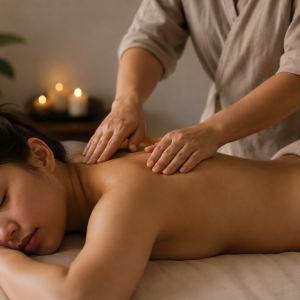
Long before wellness became an industry, people understood something remarkably simple: human touch can be comforting.
Across different cultures and generations, touch has been used to soothe tired bodies, provide comfort, encourage relaxation, and support recovery. While the techniques and traditions have varied, the underlying idea remains familiar—sometimes the body responds to care not only through movement and medicine, but through intentional touch.
Today, therapeutic massage brings many of these principles into a modern wellness setting.
But its history goes much deeper than a relaxing treatment.
The Ancient Roots of Therapeutic Touch
Massage and therapeutic touch appear in wellness traditions around the world.
Ancient practitioners used hands-on techniques to work with muscles, movement, circulation, and overall physical well-being. Different cultures developed their own approaches based on their understanding of the body and health.
In Ayurvedic traditions, massage has long been connected with daily wellness and balance.
Traditional Chinese medicine developed practices involving massage and bodywork alongside acupuncture and other approaches.
In Japan, forms of therapeutic bodywork evolved into techniques such as Shiatsu, emphasizing pressure and awareness of the body’s pathways.
Across these traditions, touch wasn’t simply about luxury.
It was often viewed as part of maintaining the body and supporting overall well-being.
Why Touch Can Feel So Powerful
Touch is one of our most fundamental senses.
A reassuring hand, a gentle embrace, or therapeutic pressure can communicate something that words sometimes cannot: you can pause here.
During a massage, intentional touch may help create an environment where the body can begin to relax.
People often seek massage to support:
- Muscle relaxation
- Stress reduction
- Mobility
- Recovery after physical activity
- General relaxation
- Greater awareness of physical tension
The experience can also provide something increasingly difficult to find in modern life: uninterrupted time to slow down.
Therapeutic Touch Is More Than “Rubbing Sore Muscles”
Modern massage therapy can be highly individualized.
A skilled massage therapist considers factors such as your comfort, movement patterns, areas of tension, lifestyle, and goals.
Different techniques can be used depending on what you’re looking for.
Deep Tissue Massage
Often focuses on deeper layers of muscle and connective tissue and may be appropriate for areas of persistent muscular tension.
Shiatsu
A Japanese bodywork tradition using pressure and rhythmic techniques.
Lymphatic Massage
Uses gentle, specialized movements designed to support lymphatic flow.
Sports Massage
Can be incorporated into routines for people who are physically active and want to support recovery and mobility.
The right technique isn’t necessarily the most intense one.
Effective therapeutic touch should be purposeful and appropriate for the individual.
The Mind-Body Connection
One of the most valuable things about therapeutic touch is that it reminds us that physical and emotional wellness aren’t completely separate.
A stressful week can leave your body feeling different.
A physically demanding routine can influence your mood.
Poor sleep can affect both your energy and your ability to recover.
This is why a holistic wellness approach can include multiple forms of care.
At Art of Healing, massage therapy can complement services such as acupuncture, cupping, Reiki, EFT, counseling, and Ayurvedic medicine.
Each addresses wellness from a different perspective.
Touch as an Opportunity to Reconnect With Yourself
Modern life can make it surprisingly easy to disconnect from the body.
We sit at desks.
We stare at screens.
We rush between responsibilities.
We ignore small signs of tension because there is always something else to do.
Therapeutic massage creates a deliberate pause.
For an hour or more, your attention can move away from your responsibilities and toward your physical experience.
Where are you holding tension?
What feels relaxed?
What feels restricted?
What does your body need more of?
That awareness can be just as valuable as the physical experience of the massage itself.
A Modern Practice With Ancient Foundations
Massage therapy has changed considerably over time, but its fundamental purpose remains recognizable.
People still seek intentional touch because they want to care for their bodies, reduce tension, support movement, and create moments of restoration.
The modern approach simply gives us more ways to understand the body and tailor care to the individual.
And perhaps that’s what makes therapeutic touch so enduring.
The techniques may evolve, but the human need for care, connection, and restoration remains.
The Healing Power of Intentional Touch
For centuries, people have turned to therapeutic touch to care for the body and create moments of restoration.
Today, massage therapy gives us a modern way to continue that tradition—with greater understanding of anatomy, movement, and individualized care.
At Art of Healing, massage isn’t simply about working on muscles. It’s an opportunity to slow down, reconnect with your body, and make intentional space for your well-being.
Sometimes healing begins with something wonderfully simple:
being cared for through purposeful touch.
Follow Us