
Have you ever wondered why certain situations trigger a strong emotional response, even when they seem relatively small? Perhaps criticism feels overwhelming, conflict makes you want to withdraw, or you constantly feel responsible for everyone else’s happiness. These reactions aren’t signs of weakness—they may be rooted in emotional conditioning that began long before adulthood.
From our earliest years, we learn how to interpret the world through our experiences. The way we were comforted, corrected, encouraged, or even ignored can influence how we think, feel, and respond throughout life. While these patterns often develop to help us adapt, they don’t have to define our future.
At Art of Healing, we believe that understanding where emotional patterns come from is the first step toward creating healthier ones. With holistic approaches like Emotional Freedom Technique (EFT), counseling, and other mind-body therapies, it’s possible to build greater emotional awareness and resilience.
What Is Emotional Conditioning?
Emotional conditioning is the process through which repeated experiences shape the way we respond to people, situations, and emotions.
As children, our brains are constantly learning. We absorb messages about safety, relationships, success, and self-worth—not only through words, but through everyday experiences.
Over time, these experiences can create automatic emotional responses that continue into adulthood.
For example, someone who frequently felt criticized as a child may become highly sensitive to feedback later in life. Someone who learned to suppress emotions may struggle to express their needs, even in healthy relationships.
These patterns often develop as protective strategies, helping us cope with our environment at the time.
Childhood Experiences Leave Lasting Impressions
Every childhood is different, and emotional conditioning isn’t limited to major traumatic events.
Even subtle, repeated experiences can shape our beliefs about ourselves and the world.
These might include:
- Feeling unheard or dismissed
- Being expected to “stay strong” or hide emotions
- Receiving praise only for achievements
- Growing up in a high-stress environment
- Feeling responsible for others’ emotions
- Experiencing inconsistent support or affection
While these experiences don’t determine your future, they can influence how you navigate relationships, stress, and emotions as an adult.
How Emotional Conditioning Shows Up in Daily Life
Many emotional patterns become so familiar that we stop noticing them.
You may find yourself:
- Avoiding conflict at all costs
- Overthinking conversations
- Constantly seeking reassurance
- Struggling to say no
- Feeling guilty when prioritizing yourself
- Reacting strongly to criticism
- Perfectionism or fear of failure
- Difficulty trusting others
These responses aren’t personality flaws—they’re often learned patterns that once served a purpose.
The encouraging news is that learned patterns can also be unlearned.
Awareness Creates the Opportunity for Change
One of the biggest misconceptions about emotional healing is that you need to relive every painful memory to move forward.
In reality, healing often begins with simple awareness.
When you recognize your emotional patterns without judging yourself, you create space to respond differently.
Instead of asking:
“What’s wrong with me?”
Try asking:
- Where might this reaction come from?
- Is this response helping me today?
- What would a healthier response look like?
- What do I actually need in this moment?
Curiosity is often far more healing than self-criticism.
How Emotional Freedom Technique (EFT) May Help
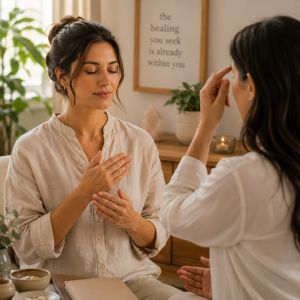
Emotional Freedom Technique (EFT)—commonly known as tapping—is a gentle mind-body practice that combines focused awareness with light tapping on specific acupressure points.
Rather than suppressing difficult emotions, EFT encourages you to acknowledge them while promoting a greater sense of calm and emotional regulation.
Many people incorporate EFT into their wellness routine to support:
- Stress management
- Emotional resilience
- Anxiety reduction
- Self-awareness
- Processing difficult emotions
- Building healthier emotional responses
Everyone’s healing journey is different, which is why EFT is often most effective as part of a personalized wellness plan.
Healing the Mind and Body Together
Emotional experiences don’t only affect our thoughts—they also influence the body.
Long-term stress may contribute to muscle tension, sleep disturbances, fatigue, headaches, and difficulty relaxing.
At Art of Healing, we take a whole-person approach to wellness by recognizing the connection between emotional and physical health.
Complementary therapies may include:
Counseling
Counseling provides a safe and supportive environment to explore emotional patterns, develop healthier coping strategies, and foster personal growth.
Acupuncture
Acupuncture may help promote relaxation, support nervous system balance, and complement emotional wellness practices.
Massage Therapy
Massage therapy can ease physical tension that often accompanies chronic stress and emotional overwhelm.
Together, these therapies support healing that extends beyond managing symptoms.
Small Ways to Begin Rewriting Emotional Patterns
Healing doesn’t happen through one breakthrough moment—it develops through consistent, compassionate practice.
You can begin by:
- Becoming curious about emotional triggers
- Practicing mindfulness throughout the day
- Journaling recurring thoughts or feelings
- Challenging negative self-talk
- Setting healthy boundaries
- Seeking support when needed
- Celebrating progress rather than perfection
Each small step strengthens new, healthier emotional habits.
Your Past May Explain You—It Doesn’t Have to Define You
The experiences that shaped you are part of your story, but they don’t have to determine your future. As you begin to understand your emotional conditioning with compassion instead of judgment, you create opportunities for meaningful growth and lasting change.
At Art of Healing in Atlanta & Sandy Springs, we believe healing starts with awareness. Through Emotional Freedom Technique (EFT), counseling, acupuncture, and other holistic therapies, we’re here to support you in building a healthier relationship with yourself—one step at a time.
Follow Us